 Save
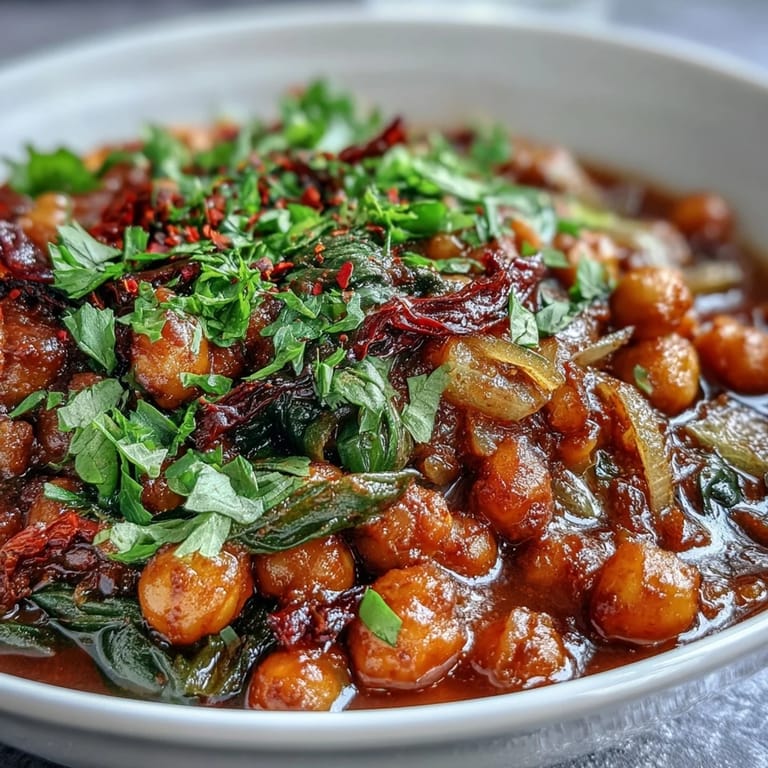
Save There's something almost magical about the moment a pot of spices hits hot oil—that sudden bloom of warmth that fills your kitchen and makes you pause what you're doing. I discovered this stew on a particularly grey afternoon when I had a can of chickpeas staring at me from the pantry and absolutely no idea what to do with them. What started as a quiet experiment became the kind of dish I now make whenever I need something that feels both nourishing and alive, something that tastes like it's been simmering with intention.
I made this for my sister during one of those visits where we both showed up tired and neither of us wanted to order takeout. Watching her face when she tasted it—that moment of surprise that something so simple could taste this good—reminded me why I keep coming back to it. It's become our shorthand for "let's take care of ourselves tonight."
Ingredients
- Olive oil: Use the good stuff here since there's nowhere for mediocre oil to hide in a stew this straightforward.
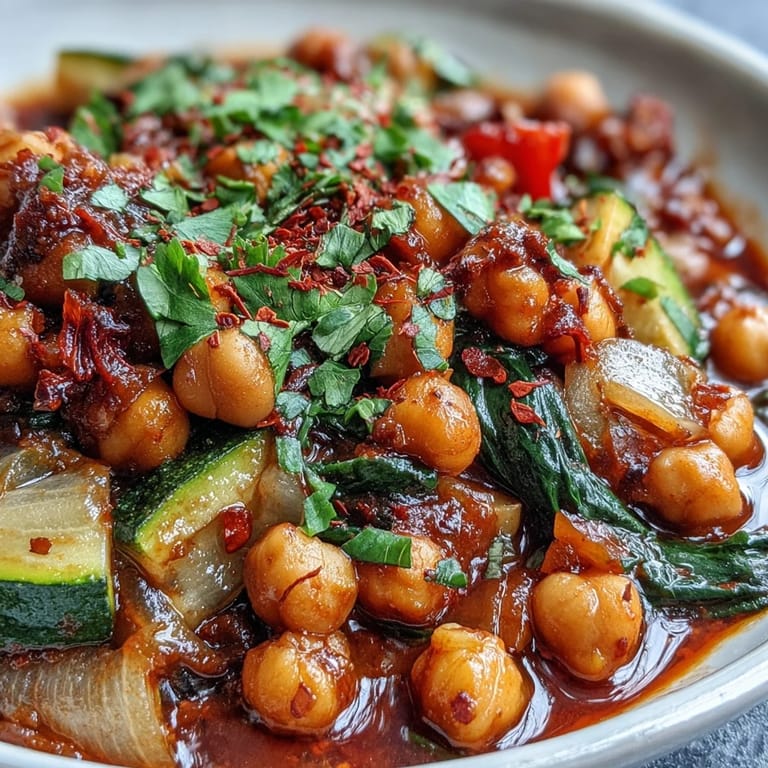
- Onion, garlic, carrots, bell pepper, and zucchini: This is your flavor foundation, and the mix matters more than perfection in cutting—rough dice works beautifully.
- Chickpeas: Two cans give you that hearty protein base that makes this actually stick with you; rinsing them removes the excess starch and prevents mushiness.
- Ground cumin, coriander, smoked paprika, turmeric, and chili flakes: These five create the entire personality of the dish, so don't skimp or substitute randomly.
- Black pepper and sea salt: Taste as you go because these seasonings matter at the end even more than the beginning.
- Diced tomatoes and vegetable broth: Together they create the liquid base that ties everything into actual stew rather than just seasoned vegetables.
- Spinach or kale and fresh lemon juice: The greens add nutrition and brightness; the lemon is what makes people ask for the recipe.
- Fresh cilantro or parsley: This garnish isn't decorative—it's genuinely needed to lift all those warm spices at the end.
Tired of Takeout? 🥡
Get 10 meals you can make faster than delivery arrives. Seriously.
One email. No spam. Unsubscribe anytime.
Instructions
- Warm Your Oil and Soften Your Base:
- Heat olive oil in a large pot over medium heat, then add diced onion and let it cook for 3–4 minutes until it starts turning translucent and softening at the edges. You'll notice the kitchen starting to smell inviting already, which is your sign you're on the right track.
- Build Flavor with Vegetables:
- Add minced garlic, diced carrots, bell pepper, and zucchini, stirring occasionally for about 5 minutes until everything begins to soften and the raw vegetable sharpness starts fading. This is when you might realize you actually enjoy cooking because everything is transforming right in front of you.
- Toast Your Spices:
- Stir in cumin, coriander, smoked paprika, turmeric, chili flakes, black pepper, and salt, then let them cook for exactly 1 minute—this step blooms the spices and makes them taste like themselves rather than dusty powder. You'll smell the shift happen, and it's almost startling how much more alive everything smells.
- Merge Everything Together:
- Add drained chickpeas, canned tomatoes with their juice, and vegetable broth, then bring the whole thing to a boil before reducing heat and simmering uncovered for 20–25 minutes. Stir occasionally and watch it transform into actual stew as the flavors start talking to each other.
- Finish with Greens and Brightness:
- Stir in chopped spinach or kale and cook for 2–3 minutes until wilted, then add fresh lemon juice and taste before adjusting salt or heat. The lemon hits differently when you add it this late—it's not cooking into the background but staying present.
- Serve with Purpose:
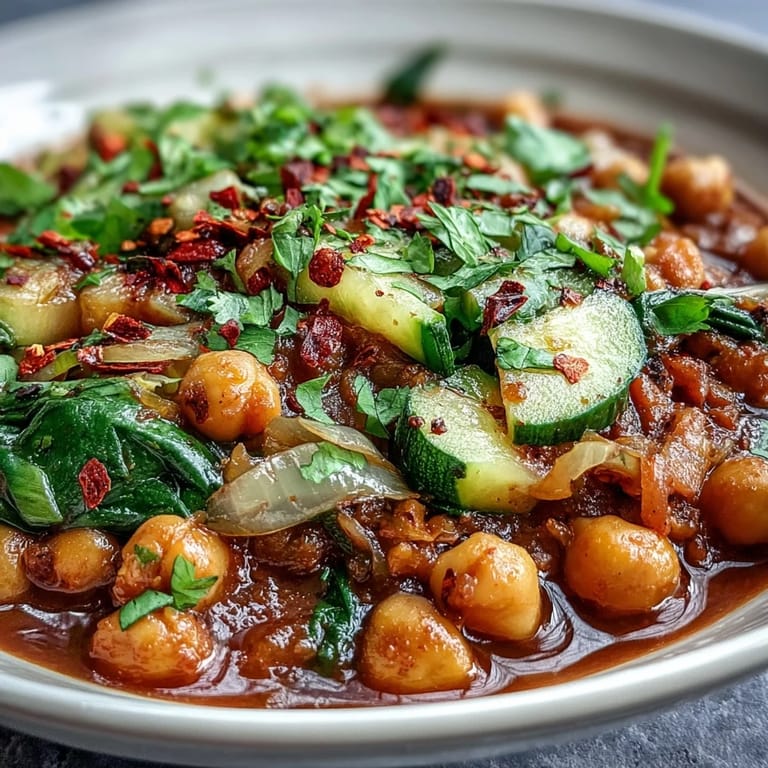
- Ladle into bowls and top with fresh cilantro or parsley, then serve hot while it still has that just-made energy. Eat it with crusty bread or over rice if you want to stretch it further, or just eat it straight from the bowl on a day when you need something real.
 Save
Save There was a night when my neighbor stopped by while I was making this, and the smell pulled her into my kitchen before I could even explain what I was doing. By the time she left, I'd sent her home with a container and the handwritten spice list because she kept saying it smelled like comfort but tasted like adventure. That's when I understood this stew was doing something beyond just feeding people.
Why This Stew Works Every Single Time
The genius of this recipe is that it doesn't rely on long cooking or rare ingredients to taste incredible—it relies on proper spice ratios and the order you add things. Every element has a reason for being there, which means you can trust the process even when you're tired or distracted. I've made it dozens of times now, and the only variation that ever happens is how much heat I add depending on my mood.
How to Make It Your Own
The beauty of a stew like this is that it's flexible enough to meet you where you are. I've added sweet potato when I had one sitting around, thrown in eggplant when I wanted more substance, and even experimented with adding coconut milk when I wanted it creamier. The spice base is strong enough to carry whatever vegetables you decide to include, which means you're never actually limited by what's in your fridge.
The Real Reason I Keep Making This
Honestly, it's because this stew sits at that perfect intersection of being healthy enough to make you feel good, interesting enough to actually enjoy eating, and simple enough that you're not stressed the entire time you're cooking it. There's no fussy technique or hard-to-find ingredient standing between you and a meal that tastes like someone who knows what they're doing made it. That combination is rare, which is why this pot keeps getting pulled out of the cabinet again and again.
- Brown rice or quinoa make it more substantial if you're really hungry, but honestly it stands perfectly well on its own.
- Make extra and eat it for lunch the next day because it actually gets better as the spices settle and deepen.
- Adjust the chili flakes based on your heat tolerance—start with half the amount and work up rather than backing down from too much.
 Save
Save This is the kind of recipe that reminds me why I love cooking in the first place—not because it's complicated or impressive, but because it genuinely nourishes and it brings people together. Make it when you need to feel grounded, when you want to take care of yourself, or when you're tired of pretending restaurant food is actually better than what you can make at home.
Recipe FAQs
- → Is spicy chickpea stew freezer-friendly?
Yes, this stew freezes beautifully for up to 3 months. Cool completely before transferring to airtight containers. Thaw overnight in the refrigerator and reheat gently on the stovetet.
- → Can I make this stew in a slow cooker?
Absolutely. Sauté vegetables and spices first, then transfer everything to your slow cooker. Cook on low for 6-7 hours or high for 3-4 hours. Add spinach during the last 30 minutes.
- → How can I add more protein to this dish?
Stir in cubed tofu during the last 15 minutes, add a cup of red lentils with the chickpeas, or serve over quinoa instead of rice for an additional protein boost.
- → What herbs work best as garnish?
Fresh cilantro brings bright, citrusy notes that complement the spices perfectly. Flat-leaf parsley works well too, especially if you prefer a milder flavor profile.
- → Can I use dried chickpeas instead of canned?
Certainly. Soak 1 cup dried chickpeas overnight, then simmer for 90 minutes until tender before adding to the stew. You may need to adjust the broth slightly as dried beans absorb more liquid.