 Save
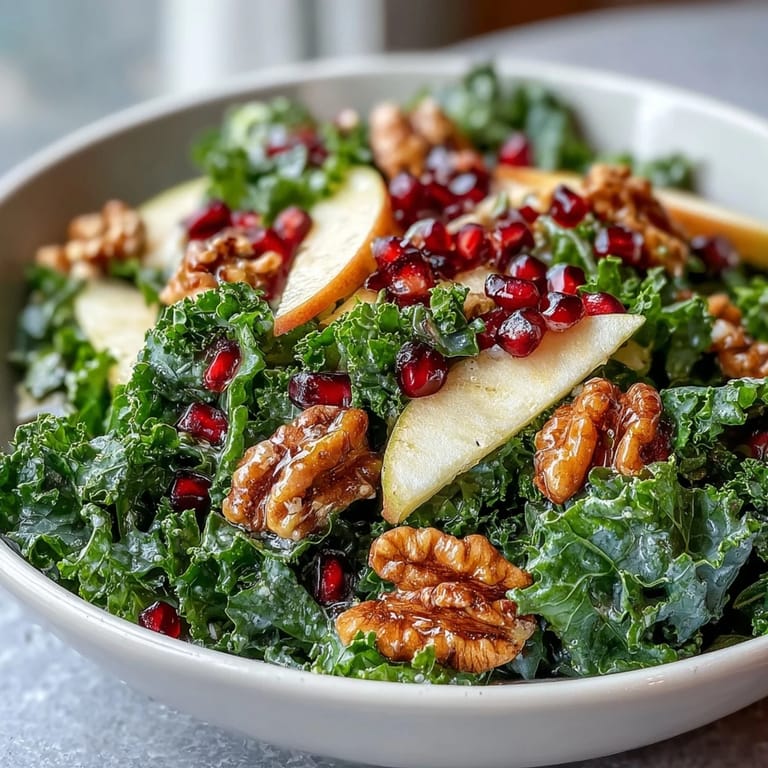
Save There's something almost meditative about massaging kale with your bare hands—the leaves gradually soften and darken, and suddenly you realize you're holding something that feels alive. I stumbled into this bowl on a Tuesday afternoon when I was tired of sad desk lunches and wanted something that actually tasted like it was worth eating. The pomegranate seeds were on sale, the walnuts were already in my pantry, and everything came together in less time than it takes to scroll through your phone. What emerged was this impossibly vibrant, crunchy, tart-and-sweet balance that somehow felt both indulgent and virtuous at the same time.
My sister came over unexpectedly one weekend and caught me eating this straight from a bowl while standing at the counter. She took one bite, stole my fork, and by the end we'd made a second one together, talking about nothing important while the pomegranate juice stained our fingertips. That's when I knew this wasn't just a salad—it was the kind of thing that brings people together without any fuss or pretense.
Ingredients
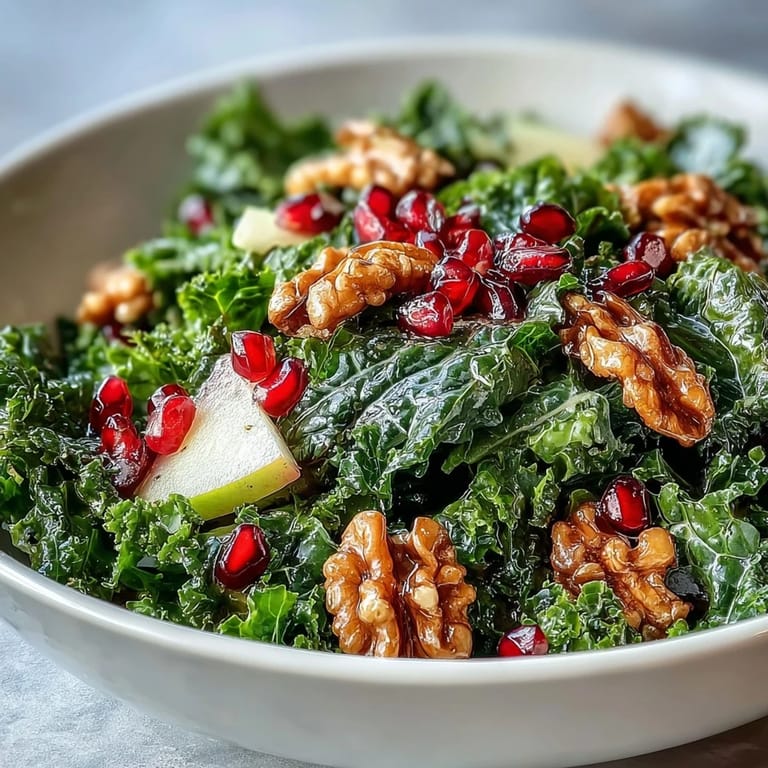
- Kale leaves: The heartier cousin of lettuce that actually holds up to massage and dressing without getting soggy or sad.
- Apple: Keeps everything fresh and bright—I learned the hard way that a food processor makes them too mushy, so slice by hand.
- Pomegranate seeds: These little flavor bombs burst in your mouth and add that jewel-like color that makes you actually want to eat your greens.
- Walnuts: The toasted, earthy crunch that keeps this from feeling like punishment masquerading as health food.
- Extra-virgin olive oil: Don't skimp here—this is where half the flavor lives.
- Apple cider vinegar: Cuts through everything with just enough tartness to make your mouth happy.
- Honey or maple syrup: A touch of sweetness that balances the vinegar without making it taste like dessert.
- Dijon mustard: The secret weapon that ties everything together and adds a subtle complexity you can't quite put your finger on.
Tired of Takeout? 🥡
Get 10 meals you can make faster than delivery arrives. Seriously.
One email. No spam. Unsubscribe anytime.
Instructions
- Soften the kale:
- Chop your kale and pile it into a big bowl. Drizzle with a tablespoon of olive oil and a pinch of salt, then use your hands to massage and rub those leaves for about a minute or two until they turn a deeper green and feel less like they might fight back. You'll feel the texture shift—that's when you know you're done.
- Make the dressing:
- Whisk together the remaining oil, vinegar, honey, mustard, salt, and pepper in a small bowl until it looks emulsified and smells like something you actually want to eat. Taste it straight—this is where you dial in the seasoning to your preference.
- Assemble the moment:
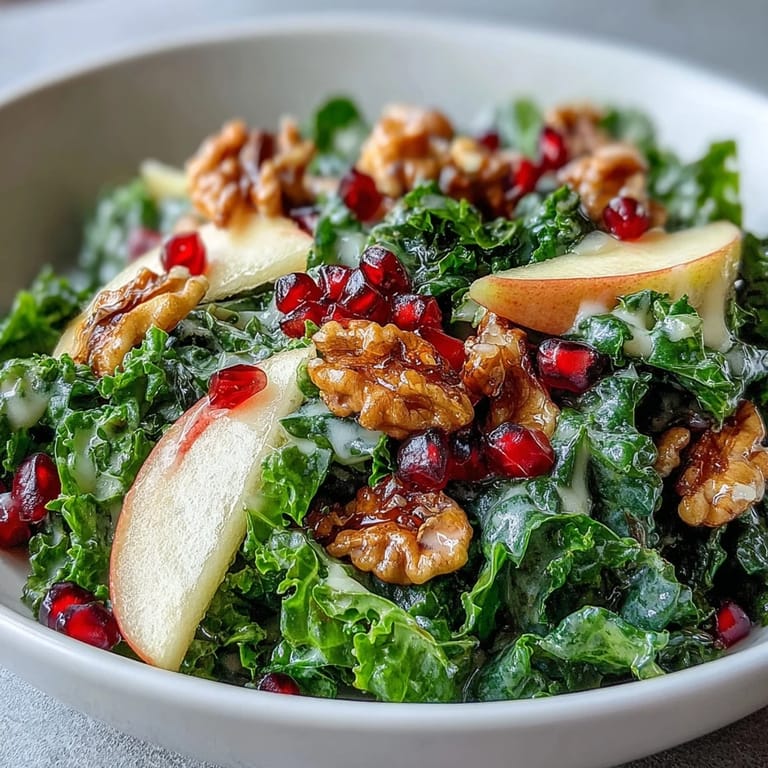
- Toss your apple slices, pomegranate seeds, and walnuts in with the kale, then pour the dressing over everything. Gently turn it all together with tongs or two forks so nothing gets bruised, but everything gets coated.
- Let it rest (optional but worth it):
- If you have 10 minutes, let it sit—the kale absorbs the dressing and everything mingles into something greater than its parts. If you're hungry now, eat it immediately; it's delicious either way.
 Save
Save I made this for a friend who'd been going through a rough patch, and she told me later that sitting down with something this colorful and intentional felt like the first moment she'd actually taken care of herself in weeks. Food does that sometimes—it's not about nutrition or Instagram-worthiness, it's about the small act of saying to yourself that you deserve something good.
Why the Massage Matters
Most people don't realize that raw kale is inherently tough—it's designed by nature to be sturdy and unflinching. When you massage it with salt and oil, you're not just making it softer; you're breaking down the cell walls in a way that allows the dressing to penetrate and the flavors to develop. The first time I skipped this step thinking I was saving time, the salad tasted like I was eating a garnish instead of actual food. Now I see the massage as part of the recipe, not a shortcut to skip.
The Pomegranate Seed Game-Changer
Pomegranate seeds do something unexpected in a salad—they're not just pretty, they're functional. The tartness cuts through the richness of the olive oil, and that burst of juice keeps everything tasting bright rather than heavy. I used to think pomegranates were too much work or too expensive to bother with, until I realized that one pomegranate gives you enough seeds for multiple bowls. Buy them when they're in season and freeze the seeds; they thaw perfectly and keep for months.
Building Your Own Version
This is the kind of salad that actually improves when you make it your own. I've added roasted chickpeas for protein, swapped the walnuts for pistachios, used pears instead of apples, and even added shaved cheese on days when I felt like being fancy. The structure works because the massage base holds everything together, the dressing is balanced enough to play well with variations, and the pomegranate seeds will make almost any combination taste intentional. The best part is watching what happens when you trust your instincts instead of following the formula exactly.
- Toast your walnuts lightly in a dry pan for two minutes if you want them to taste even nuttier and more pronounced.
- Make the dressing in the bowl you'll use for salad to save yourself a dish—one less thing to wash matters more than you'd think.
- This bowl is even better the next day if you've resisted the urge to dress it all at once; add fresh dressing right before you eat it for the best texture.
 Save
Save This bowl reminds me that the simplest meals are often the ones that stick with you the longest. Make it once, and it'll probably become the salad you reach for whenever you need something that tastes good and makes you feel good at the same time.
Recipe FAQs
- → Why massage the kale?
Massaging kale with olive oil and salt breaks down tough fibers, making the leaves tender and easier to eat. This simple step transforms raw kale from bitter and chewy to soft and slightly sweet.
- → Can I prepare this ahead?
Yes, you can massaged kale and prepare the dressing up to 24 hours in advance. Add the apple slices and pomegranate seeds just before serving to maintain their crisp texture and prevent oxidation.
- → What can I use instead of walnuts?
Pecans, almonds, or pumpkin seeds work well as substitutes. For nut-free options, try roasted chickpeas or sunflower seeds to maintain that satisfying crunch.
- → How do I remove pomegranate seeds easily?
Score the pomegranate around the middle, twist to open, then hold each half cut-side down over a bowl. Tap the back firmly with a wooden spoon—the seeds will fall right out while the white membrane stays intact.
- → What apples work best?
Honeycrisp, Fuji, or Granny Smith apples hold their texture well and provide a nice balance of sweetness and tartness that complements the earthy kale and tangy pomegranate.
- → Can I add protein?
Crumbled feta, goat cheese, or grilled chicken make excellent additions. For plant-based protein, try quinoa, chickpeas, or hemp seeds to make it a complete meal.