 Save
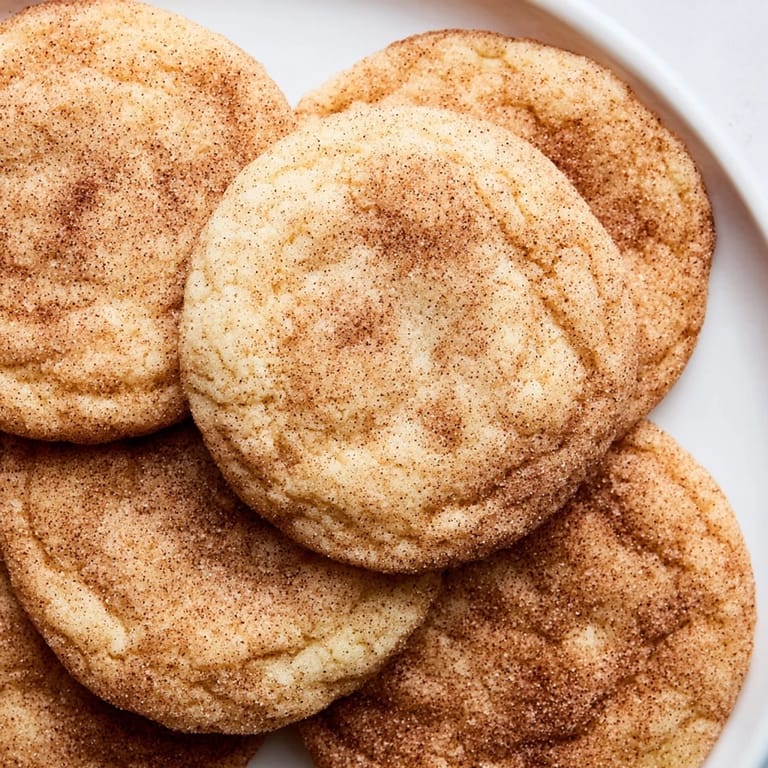
Save My neighbor slid a plate of snickerdoodles through our kitchen window one autumn afternoon, and I bit into one still warm from her oven. The cinnamon sugar crackled against my teeth, but what surprised me most was that subtle tang underneath—a flavor I couldn't name but absolutely needed to understand. That's when she told me about the cream of tartar, that secret ingredient that makes snickerdoodles taste like snickerdoodles and not just regular sugar cookies. I've been chasing that exact balance ever since, and now these are the cookies I make when I want to feel like I know what I'm doing in the kitchen.
I made these for my daughter's school bake sale, and somehow I sent in only two dozen when I'd baked them just that morning. She looked at the box, then at me, and said nothing had to say it all. Now I always bake an extra batch on purpose, knowing full well that half won't make it past my kitchen.
Ingredients
- All-purpose flour: The foundation that should be measured by weight if you have a scale—it makes the difference between dense and pillowy.
- Cream of tartar: This is the MVP, the ingredient that gives snickerdoodles their signature subtle tang and tender crumb that no other cookie has.
- Baking soda: Works with the cream of tartar to create that perfect rise and slightly cakey-chewy texture.
- Salt: A small pinch that wakes up all the flavors and keeps the sweetness from feeling one-note.
- Unsalted butter: Softened to room temperature so it creams properly and makes the dough light and airy.
- Granulated sugar: The bulk goes into the dough for sweetness, while a smaller portion gets mixed with cinnamon for the magical exterior.
- Eggs: Add structure and moisture, so make sure they're at room temperature before you beat them in.
- Vanilla extract: Pure vanilla is worth the cost here because you can taste it in every bite.
- Ground cinnamon: Fresh is better if you can smell it in the container—it should be fragrant and warm, not dusty.
Tired of Takeout? 🥡
Get 10 meals you can make faster than delivery arrives. Seriously.
One email. No spam. Unsubscribe anytime.
Instructions
- Get your oven ready:
- Preheat to 375°F and line your baking sheets with parchment paper. This small step means the cookies won't stick and will bake evenly from the bottom up.
- Mix the dry team:
- Whisk together flour, cream of tartar, baking soda, and salt in a medium bowl. You're distributing the leavening evenly so every cookie rises the same way.
- Cream the butter and sugar:
- Beat them together for 2–3 minutes until the mixture looks pale and fluffy. You're incorporating air, which is what makes these cookies tender rather than dense.
- Add eggs and vanilla:
- Beat in the eggs one at a time so they incorporate fully, then mix in the vanilla. If you do this slowly, the dough stays smooth and doesn't curdle.
- Bring it together:
- Gradually add the dry ingredients to the wet mixture, stirring just until combined. Stop as soon as you don't see streaks of flour anymore—overmixing makes tough cookies.
- Make the cinnamon sugar:
- Stir together the 1/4 cup sugar and cinnamon in a small bowl. This simple coating is doing all the heavy lifting for flavor.
- Shape and coat:
- Scoop tablespoon-sized portions of dough, roll them into balls, and roll each one in the cinnamon sugar mixture until coated. You'll get satisfaction from this part—it's tactile and the cookies start to look like themselves.
- Space them out:
- Place cookies 2 inches apart on your prepared baking sheets. This matters because they puff up slightly and need room to spread without touching.
- Bake to soft perfection:
- Bake for 9–11 minutes, watching for the moment when the edges set but the centers still look a tiny bit underdone. This is where the magic happens—they'll continue to cook as they cool.
- Cool with patience:
- Let them rest on the baking sheet for 5 minutes so they firm up enough to move, then transfer to a wire rack. This resting period lets the residual heat finish the cooking without drying them out.
 Save
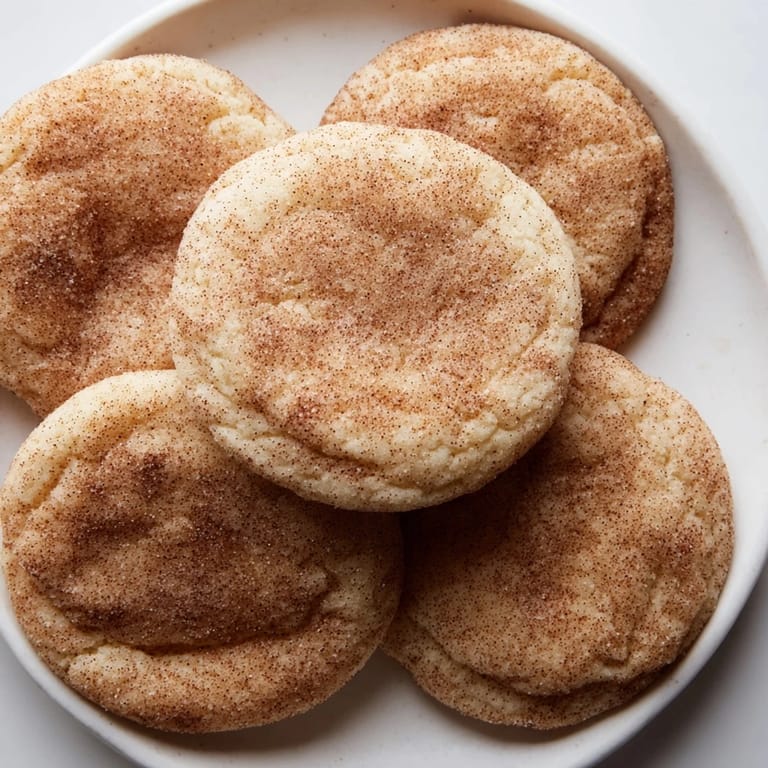
Save My son once asked why these cookies taste like Christmas even though they're not Christmas cookies, and I realized he was tasting the cinnamon, the vanilla, and something deeper—the memory of every version of this cookie he's ever had. That's when I understood that some recipes become more than food; they become the taste of home.
The Cream of Tartar Secret
For the longest time, cream of tartar seemed like an exotic ingredient that only existed in old recipes, but it's actually just a byproduct of winemaking that happens to be a kitchen miracle. It stabilizes whipped egg whites, it reacts with baking soda to create lift and tenderness, and in snickerdoodles specifically, it contributes a subtle tanginess that makes people stop mid-bite and ask what's different. Once you understand what it does, you'll start spotting it in other recipes and wondering why more people don't talk about it.
Texture Mastery
The magic of these cookies lives in that specific moment between underbaked and perfect—when the edges have set enough to hold their shape but the center still has a tiny bit of softness. It's not luck; it's knowing that baking continues for a few minutes after you pull them from the oven. The key is pulling them out just before they look completely done, letting them rest on the hot baking sheet, and then transferring them to cool completely on a rack.
Make Them Your Own
While classic snickerdoodles are perfect as-is, the recipe is flexible enough to play with once you understand the base. You can slightly underbake them if you like them extra soft, or leave them in an extra minute if you prefer a crispier bite. You can store them in an airtight container for up to five days, and they actually taste better on day two when the flavors have settled in.
- For an even puffier texture, replace half the butter with shortening.
- If you love cinnamon, don't be shy about adding a pinch more to the coating mixture.
- These cookies pair beautifully with strong coffee, hot tea, or cold milk depending on your mood.
 Save
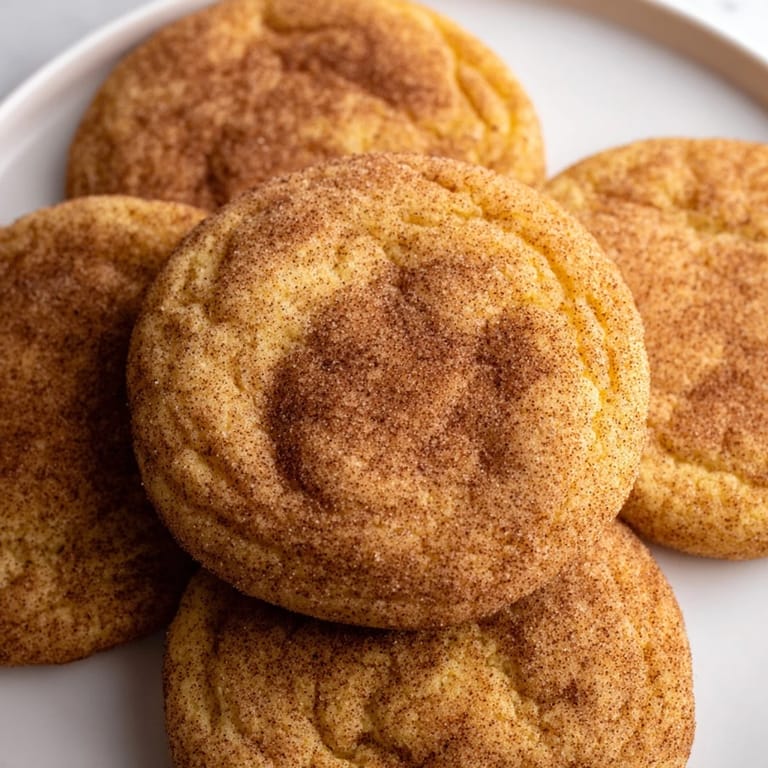
Save These snickerdoodles have been in my rotation for years now, and they never feel routine. Every batch still feels like something worth celebrating, whether you're baking them for yourself on a quiet Tuesday or for people you love.
Recipe FAQs
- → What gives these cookies their unique tang?
The tangy note comes from cream of tartar, which adds a subtle but distinctive flavor to the dough while helping achieve a soft texture.
- → How can I ensure the treats stay soft?
To maintain a soft center, slightly underbake them and allow cooling on the baking sheet before transferring to a cooling rack.
- → What is the purpose of rolling in cinnamon sugar?
Coating the dough balls in cinnamon sugar before baking adds a sweet-spicy crust that enhances aroma and texture.
- → Can I adjust the texture for a puffier result?
Replacing half the butter with shortening creates a puffier, lighter texture while keeping softness intact.
- → How should leftovers be stored?
Store in an airtight container for up to 5 days to keep the treats fresh and soft.