 Save
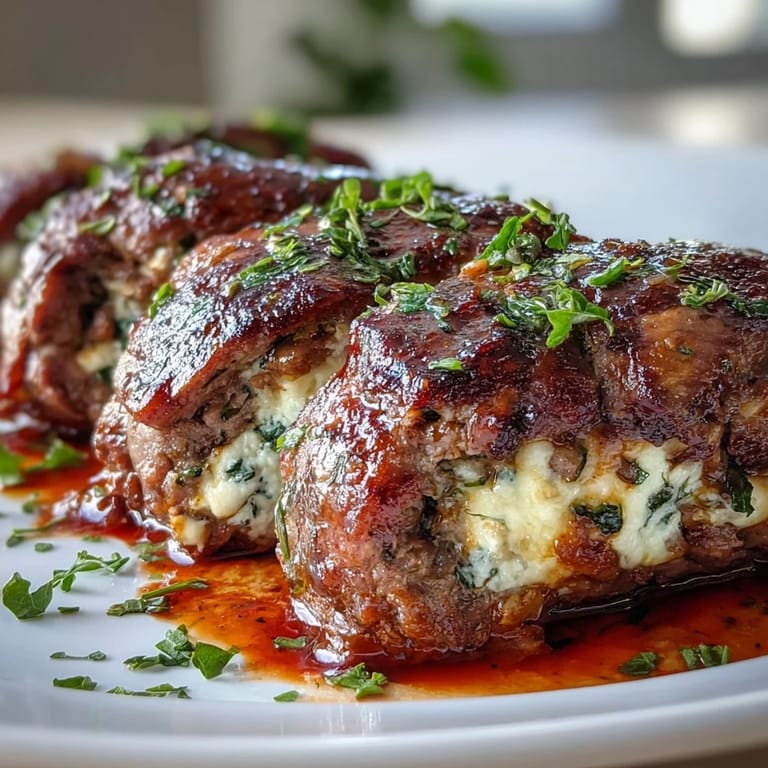
Save My neighbor Carla showed up one Sunday with a simmering pot of something that smelled like Sunday itself. She said her nonna used to make these little beef bundles every time the family came together, and now she did the same. I watched her tie the rolls with such ease, fingers moving like muscle memory. That afternoon, I learned braciole isn't just dinner, it's a reason to slow down. The kitchen smelled like tomatoes and toasted pine nuts for hours.
I made this for my brother's birthday once, and he ate three rolls before anyone else got seconds. He said it reminded him of a trip we took to Palermo years ago, even though we mostly ate arancini from street carts. Sometimes a dish doesn't have to be authentic to feel like home. It just has to be made with enough care that people notice.
Ingredients
- Thin slices beef top round or flank steak: These cuts hold up to rolling and long simmering without falling apart, and they soak up the sauce beautifully if you don't rush the braise.
- Pecorino cheese: Sharp and salty, it anchors the filling and doesn't melt away like softer cheeses might during the long cook.
- Pine nuts: Toast them lightly first or they'll taste flat, a quick minute in a dry pan wakes up their buttery sweetness.
- Raisins: They plump up in the sauce and add little pockets of sweetness that balance the salt and acid perfectly.
- Fresh parsley and basil: Freshness matters here, dried herbs won't give you that bright, grassy note that cuts through the richness.
- Garlic: Minced fine so it melts into the filling and doesn't overpower the delicate balance of flavors.
- Breadcrumbs: They help bind the filling and soak up any juices so nothing leaks out while the rolls simmer.
- Crushed tomatoes: Use good quality canned ones, they break down into a velvety sauce that clings to the meat.
- Dry red wine: Optional, but it adds depth and helps deglaze all those tasty browned bits stuck to the pan.
- Kitchen twine or toothpicks: Twine is traditional and easier to remove, but toothpicks work if you're careful not to lose count of how many you used.
Tired of Takeout? 🥡
Get 10 meals you can make faster than delivery arrives. Seriously.
One email. No spam. Unsubscribe anytime.
Instructions
- Prep the Beef:
- Lay each slice flat and pound gently to an even quarter inch, being careful not to tear the meat. Season both sides with salt and pepper, letting it sit while you make the filling.
- Mix the Filling:
- Combine pecorino, toasted pine nuts, raisins, parsley, basil, garlic, and breadcrumbs in a bowl, tossing until evenly distributed. The mixture should smell fragrant and look generous enough to stuff each roll without skimping.
- Roll and Tie:
- Spread filling evenly on each beef slice, leaving a small border, then roll tightly from one short end, tucking in the sides as you go. Secure with twine or toothpicks so nothing escapes during cooking.
- Sear the Braciole:
- Heat olive oil in a large skillet over medium high heat and brown the rolls on all sides, about six to eight minutes total. This step builds flavor and helps seal in the filling.
- Build the Sauce:
- In the same skillet, sauté onion until soft, add garlic briefly, then deglaze with red wine if using, scraping up all the browned bits. Stir in crushed tomatoes, oregano, salt, pepper, and a pinch of sugar if your tomatoes taste sharp.
- Simmer Low and Slow:
- Nestle the seared braciole into the sauce, cover, and let it bubble gently over low heat for about an hour and fifteen minutes, turning occasionally. The beef will become tender and the sauce will thicken and darken.
- Finish and Serve:
- Remove the rolls, snip off the twine or pull out toothpicks, then slice each roll into thick rounds. Spoon the rich tomato sauce over the top and serve immediately.
 Save
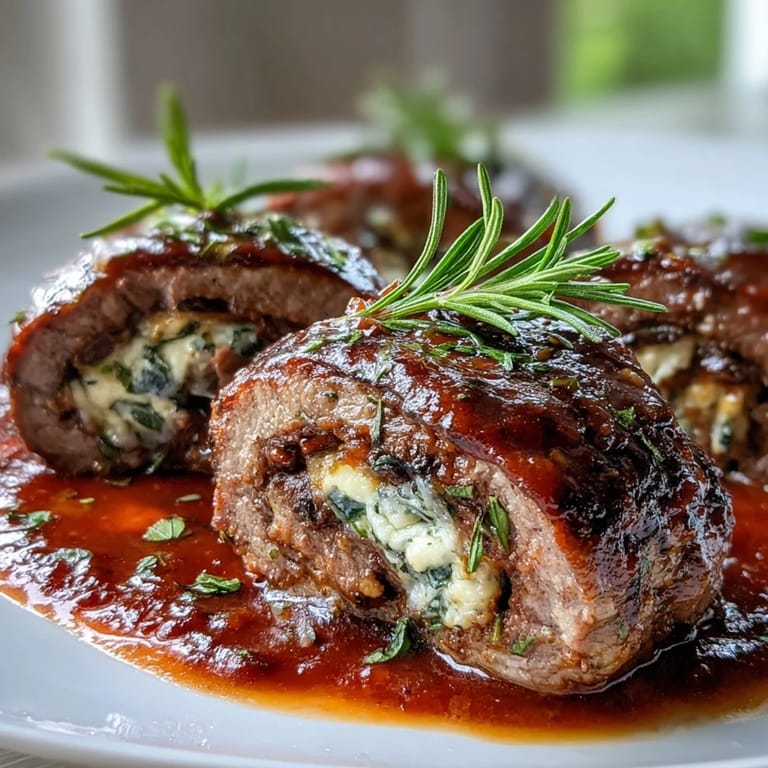
Save The first time I sliced into a braciole and saw the spiral of filling inside, I felt like I'd unlocked something. It wasn't just a rolled steak anymore, it was proof that a little patience and care could turn simple ingredients into something worth remembering. My friend Anna said it looked like a painting on a plate, and honestly, she wasn't wrong.
Choosing the Right Cut
Top round and flank steak are lean enough to roll without excess fat getting in the way, but they also have enough structure to hold up during the long braise. If your butcher can slice them thin for you, let them, it saves time and ensures even thickness. I've tried using thicker cuts and pounding them myself, and it works, but the texture is never quite as uniform.
What to Serve Alongside
This dish practically begs for something starchy to soak up the sauce, whether that's pasta, creamy polenta, or just a hunk of crusty bread. I usually toss some rigatoni in the leftover sauce and serve it as a first course, then bring out the sliced braciole as the main event. A simple green salad with lemon and olive oil helps cut through the richness without competing for attention.
Making It Ahead and Storing
Braciole actually improves after a day in the fridge, the flavors settle and the sauce thickens into something even more cohesive. You can assemble the rolls in the morning, sear them, then finish the braise later in the day, or cook the whole thing a day ahead and reheat gently on the stove. I've even frozen cooked braciole in their sauce, and they thaw beautifully for a weeknight meal that tastes like you spent all day cooking.
- Let the braciole cool completely before refrigerating to avoid condensation that waters down the sauce.
- Reheat covered over low heat with a splash of broth or water to loosen the sauce.
- Freeze in individual portions if you want quick future dinners without leftovers piling up.
 Save
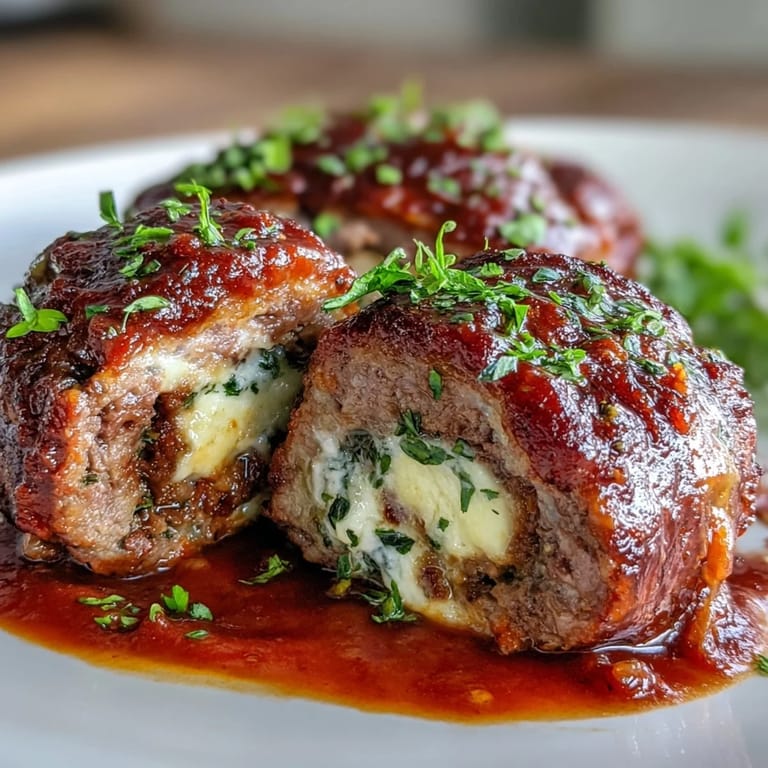
Save Every time I make braciole, I think about Carla and that first pot she brought over, how generous it felt to share something that took so much time. Now when I tie up those little rolls, I understand why she kept the tradition going. It's a dish that asks you to slow down, and somehow that feels like a gift.
Recipe FAQs
- → What cut of beef works best for braciole?
Top round or flank steak works perfectly for braciole. Choose thin slices about 5 ounces each, or ask your butcher to slice them thinly. Pound them to 1/4-inch thickness for even cooking and easier rolling.
- → Can I make braciole ahead of time?
Yes, braciole actually tastes better the next day. Prepare completely, cool, and refrigerate for up to 2 days. Reheat gently in the sauce over low heat until warmed through.
- → What can I substitute for pine nuts?
If pine nuts aren't available or due to allergies, use chopped walnuts or almonds. Toast them lightly before adding to the filling for enhanced flavor and texture.
- → How do I prevent the braciole from falling apart?
Secure each roll tightly with kitchen twine or toothpicks before searing. Don't overfill, and make sure to tuck in the sides while rolling. Sear on all sides to seal before simmering.
- → What should I serve with braciole?
Braciole pairs beautifully with pasta tossed in the tomato sauce, creamy polenta, or crusty Italian bread. A simple side salad and robust Sicilian red wine complete the meal perfectly.
- → Can I freeze cooked braciole?
Absolutely. Cool completely, then freeze in an airtight container with sauce for up to 3 months. Thaw overnight in the refrigerator and reheat gently on the stovetop.