 Save
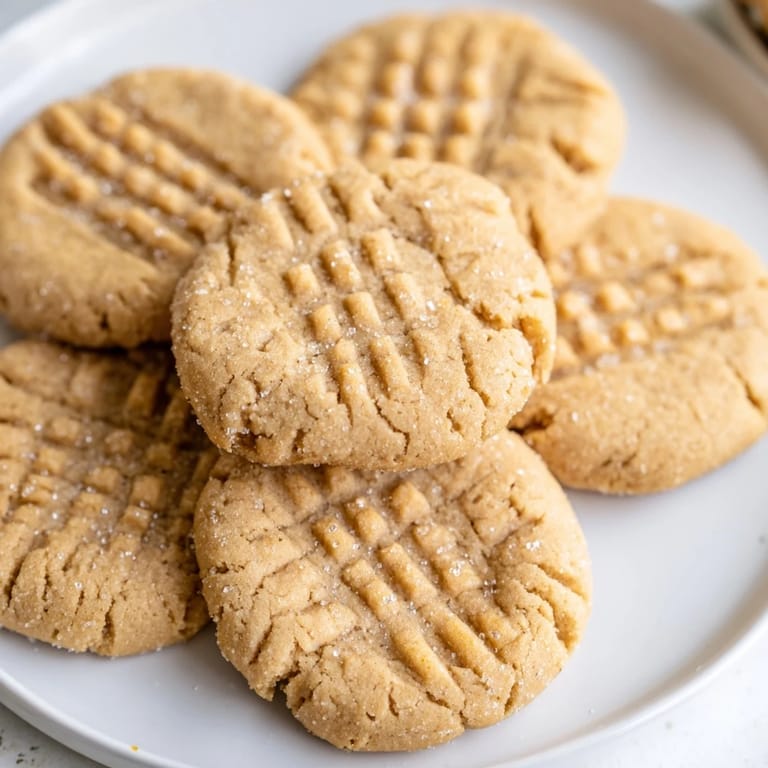
Save My neighbor's kitchen smelled like peanut butter and warm sugar the afternoon she taught me her cookie method, and I've been making them ever since. There's something about the way the dough comes together—not too soft, not too stiff—that makes you feel like you're actually getting it right. These cookies have that perfect balance: crispy edges that give way to centers so soft they practically melt. The crosshatch pattern isn't just for looks; it's the baker's signature, proof that you made these with your own hands. Every batch tastes like home, like comfort, like the kind of thing people actually want to eat.
I made these for a bake sale fundraiser years ago and sold out before the table was even set up. People kept coming back asking if I had more, and I realized it wasn't nostalgia or obligation—they genuinely loved them. That moment taught me that sometimes the simplest recipes are the ones that stick with people.
Ingredients
- All-purpose flour (1 1/4 cups): Provides structure and keeps cookies from spreading too thin; whisk it with the leavening agents so everything rises evenly.
- Baking soda and baking powder (1/2 teaspoon and 1/4 teaspoon): Work together to lift the cookies slightly and create that tender crumb; they're not interchangeable, so don't skip either one.
- Fine salt (1/4 teaspoon): Amplifies peanut flavor and balances sweetness in ways you won't consciously notice but absolutely will miss if it's gone.
- Unsalted butter (1/2 cup, softened): Softened butter creams properly and creates the foundation for a tender cookie; cold butter will make mixing a frustrating struggle.
- Creamy peanut butter (1 cup): The star ingredient—choose one you'd actually eat by the spoonful, because that's what you're tasting in every bite.
- Granulated sugar and brown sugar (3/4 cup and 1/2 cup): The combination gives you sweetness and moisture; brown sugar especially keeps centers soft longer.
- Egg (1 large): Binds everything together and adds richness without making cookies dense.
- Vanilla extract (1 teaspoon): A whisper of vanilla deepens peanut flavor; don't use imitation unless you really have to.
Tired of Takeout? 🥡
Get 10 meals you can make faster than delivery arrives. Seriously.
One email. No spam. Unsubscribe anytime.
Instructions
- Set your stage:
- Preheat the oven to 350°F and line two baking sheets with parchment paper. You want everything ready before you start mixing, so nothing sits around getting gummy.
- Combine dry ingredients:
- Whisk flour, baking soda, baking powder, and salt together in a bowl. This aerates the flour and distributes the leavening agents evenly—skip the whisking and you'll get dense patches in your cookies.
- Cream the butter and sugars:
- Beat softened butter with both sugars for about two minutes until the mixture is light, fluffy, and noticeably paler. This incorporates air and sets up the tender texture you're after.
- Add egg and vanilla:
- Mix in the egg and vanilla until fully combined. The mixture should look smooth and slightly glossy, not separated or curdled.
- Incorporate peanut butter:
- Add the creamy peanut butter and beat until no streaks of butter remain. You'll notice how rich the dough becomes—this is when it starts smelling absolutely incredible.
- Bring it together gently:
- Gradually add the dry ingredients, mixing just until you don't see any flour streaks. Overmixing toughens the cookies, so resist the urge to keep the mixer running once everything is combined.
- Shape and press:
- Scoop tablespoon-sized portions of dough, roll them into balls, and if you like, roll in granulated sugar for a subtle sparkle. Place them two inches apart on your baking sheets.
- Make the crosshatch:
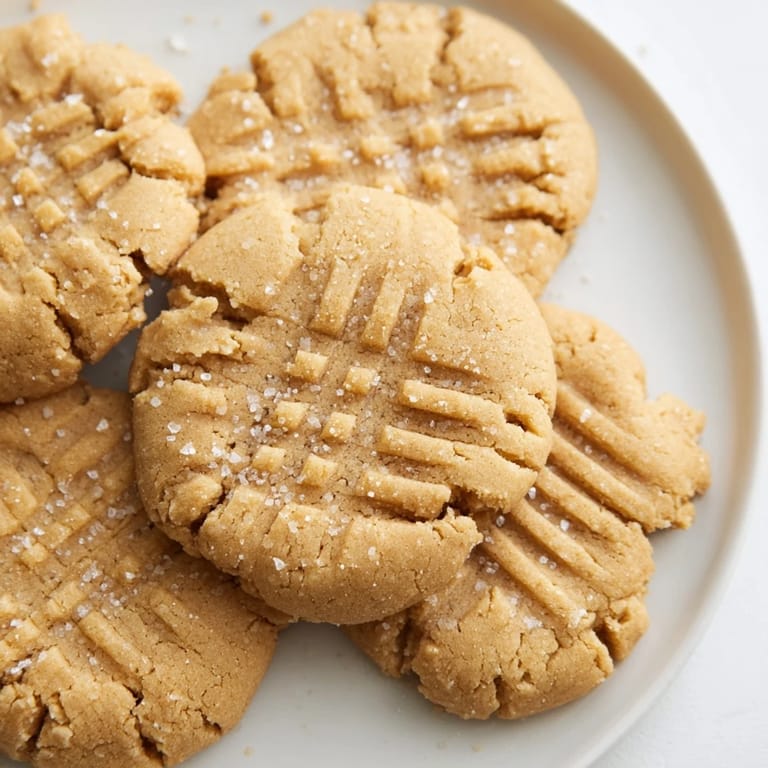
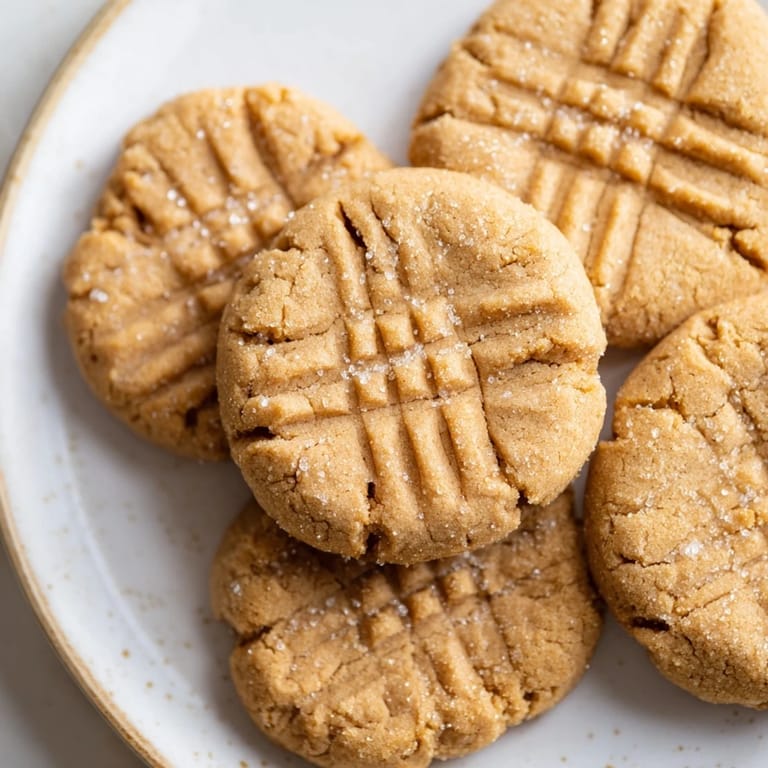
- Press down gently with a fork in one direction, then rotate the fork and press again perpendicular to the first lines. This not only looks professional—it also helps the cookies cook evenly.
- Bake to perfection:
- Bake for 10 to 12 minutes, watching for lightly golden edges while centers still look soft and slightly underbaked. They'll continue cooking on the hot pan for a minute, so don't wait for them to look fully done inside the oven.
- Cool properly:
- Let cookies rest on the baking sheet for five minutes—this helps them set without becoming brittle. Transfer them to a wire rack to cool completely, and try not to sneak one while they're still warm.
 Save
Save I once brought these to a potluck where someone's complicated multi-layer dessert went ignored while my simple cookies disappeared first. That taught me something: food that makes people feel welcome and comfortable beats impressive every time.
Why This Recipe Works Every Single Time
There's real chemistry happening in peanut butter cookie dough. The balance between butter and peanut butter creates a fat ratio that keeps cookies tender rather than cakey. The combination of granulated and brown sugar gives you sweetness and moisture in the right proportions, and the two-minute creaming step aerates the dough without overworking it. When you press the crosshatch with a fork, you're actually helping the dough bake more evenly by reducing its thickness slightly at the edges. These aren't random steps—they're the result of countless batches and small discoveries about what makes a perfect peanut butter cookie.
Making Them Your Own
The recipe is solid as written, but peanut butter cookies also welcome variation gracefully. Chunky peanut butter gives you texture bites throughout, while chocolate chips add richness without overpowering the peanut flavor. A small handful of chopped roasted peanuts scattered on top creates visual interest and reinforces that nutty taste. Even small changes feel intentional rather than thrown together, because the base recipe is strong enough to support them.
Storing and Serving
Room temperature, these cookies keep wonderfully in an airtight container for four or five days, staying soft and fresh-tasting longer than you'd expect. Some people freeze the dough balls for up to three months, baking them straight from the freezer—just add a minute or two to the bake time. They're perfect with cold milk or hot coffee, as a simple dessert after dinner, or as an afternoon snack when you need something that tastes indulgent but won't keep you in the kitchen for hours.
- Let cooled cookies sit in an airtight container; they continue softening slightly as they rest.
- If they do harden up, adding a slice of bread to the container overnight restores softness.
- These freeze beautifully, both as dough and as finished cookies, so double batches become your secret advantage.
 Save
Save These cookies are simple enough for a weeknight craving but special enough to bring to someone who'd appreciate the care. Make them once and you'll keep making them forever.
Recipe FAQs
- → How do I achieve the classic crosshatch pattern?
Press each dough ball twice with a fork in perpendicular directions before baking to create the signature crosshatch.
- → What makes these cookies soft and chewy?
The combination of creamy peanut butter, sugars, and slight underbaking keeps the texture tender and chewy.
- → Can I use crunchy peanut butter instead?
Yes, crunchy peanut butter adds extra texture and nutty bites within the cookie.
- → How can I make the edges crispier?
Bake the cookies for 1-2 minutes longer to get a slightly crisper edge while keeping the center soft.
- → Are there suggested variations to enhance flavor?
Adding chocolate chips or chopped peanuts can introduce new flavors and textures to these treats.