 Save
Save One October afternoon, my kitchen filled with the smell of roasting squash while rain pattered against the windows, and I realized this soup had become my answer to everything—a gray day, a tired evening, the moment someone needed comfort without fuss. There's something about butternut squash that feels like it was made for this purpose, sweet and earthy and forgiving. The first time I made it properly, roasting instead of boiling, the difference was so obvious I wondered why I'd ever done it another way. Now it's the recipe I return to when I want to feel like I'm taking care of myself and everyone around me.
I made this for my sister on her first day working from home during a cold snap, and she texted me later saying she'd heated it up twice more just to smell it while she worked. That's when I knew it wasn't just about flavor—it was about what the soup represented, a small act of showing up for someone on an ordinary day that felt anything but.
Ingredients
- Butternut squash (1 medium, about 1.2 kg): Roasting draws out its natural sweetness and creates a caramelized depth that simmering never achieves; don't skip this step even if you're tired.
- Onion and carrots: These are your aromatic base, softening into the background and building flavor while the squash roasts.
- Garlic (2 cloves, minced): Add it after the onions soften so it doesn't burn and turn bitter.
- Vegetable stock (800 ml): Use one you actually like tasting on its own; it becomes the foundation of every spoonful.
- Coconut milk or heavy cream (200 ml): Stir this in at the end to preserve its silky texture and prevent it from breaking or separating.
- Olive oil (2 tbsp): Half goes with the squash for roasting, half for sautéing the aromatic vegetables.
- Ground cumin and nutmeg: These spices bloom when heated with the garlic, filling your kitchen with a warm, almost sweet aroma that signals everything is on track.
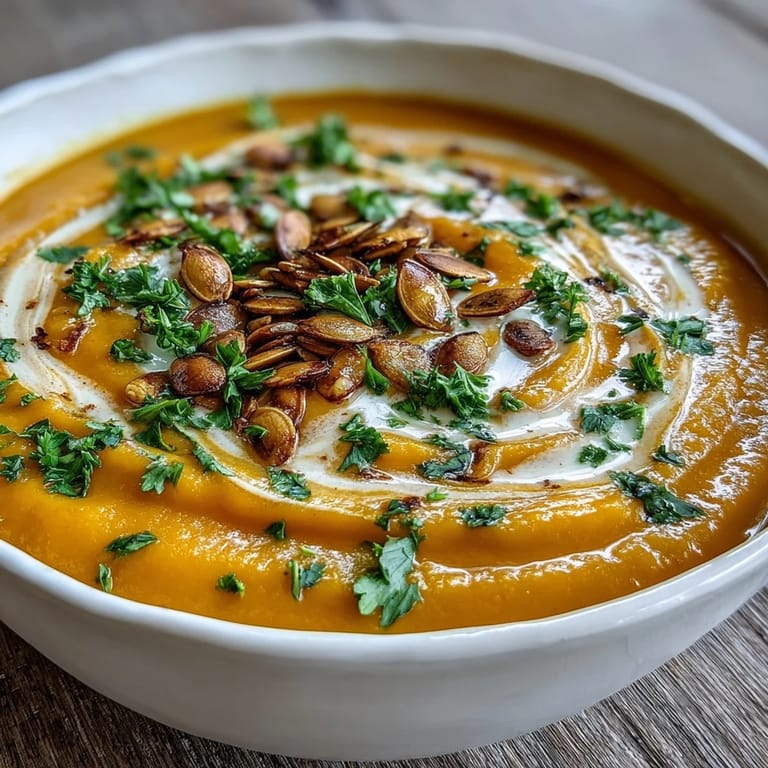
- Fresh parsley, coriander, and pumpkin seeds for garnish: The brightness and crunch remind you this is a finished dish worth celebrating, not just something to get through.
Tired of Takeout? 🥡
Get 10 meals you can make faster than delivery arrives. Seriously.
One email. No spam. Unsubscribe anytime.
Instructions
- Heat your oven and prepare the squash:
- Set the oven to 200°C (400°F) and while it preheats, toss your diced squash with 1 tablespoon olive oil, a pinch of salt, and pepper. The oil helps it caramelize, creating those burnished edges that make the soup taste deeper and more interesting.
- Roast until golden:
- Spread the squash on a baking tray in a single layer and let it roast for 25 minutes until the edges turn golden and the flesh is tender when pierced with a fork. You'll smell it transforming, that sweet, almost toasted aroma creeping through the house.
- Build your flavor base:
- While the squash roasts, heat the remaining tablespoon of olive oil in a large pot over medium heat and add your chopped onion and carrots. Let them soften for 5 to 7 minutes, stirring occasionally until they lose their raw edge and begin to turn translucent.
- Wake up the spices:
- Add your minced garlic, cumin, and nutmeg, stirring constantly for just 1 minute until the spices release their aroma and the raw garlic smell vanishes. This brief moment of heat blooms the flavors and prevents them from tasting muted in the finished soup.
- Combine and simmer:
- Add the roasted squash to the pot and pour in your vegetable stock, then bring everything to a boil before reducing the heat to a gentle simmer for 10 minutes. This allows the flavors to mingle and ensures the squash is completely tender before blending.
- Blend until silky:
- Remove from heat and use an immersion blender to purée the soup directly in the pot, moving the blender in slow circles until no chunks remain and the texture is completely smooth. If using a regular blender, let the soup cool slightly, blend in batches, and return it to the pot to avoid burns.
- Finish with creaminess:
- Stir in your coconut milk or cream gently and warm it through on low heat without letting it boil, which can cause separation or a grainy texture. Taste as you go and adjust with salt and pepper until it feels right on your tongue.
- Serve with intention:
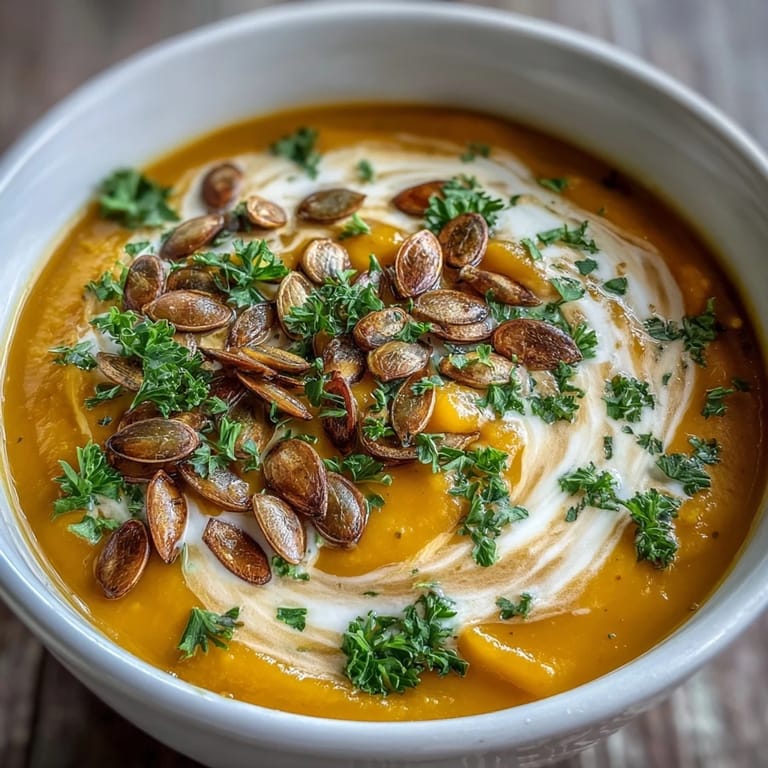
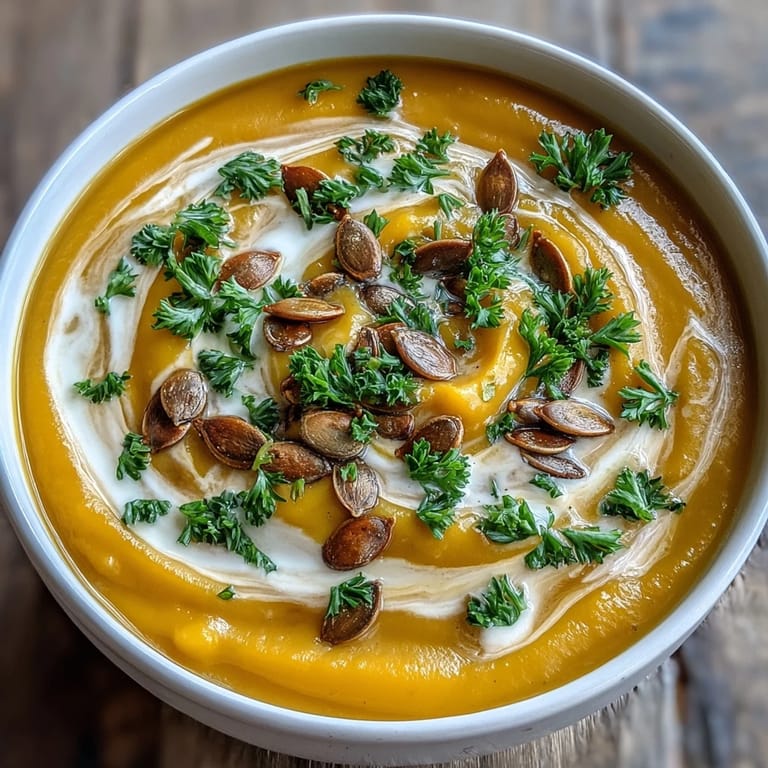
- Ladle into bowls and top with a scatter of fresh herbs, a handful of toasted pumpkin seeds, and a final swirl of cream or coconut milk for visual drama. The toppings aren't decoration—they add texture and brightness that make each spoonful feel complete.
 Save
Save There was a moment last winter when a friend came over upset about something I won't detail here, and instead of talking about it for hours, we sat at my kitchen counter with bowls of this soup, the warmth of it in our hands doing something words couldn't. That's when I understood why certain recipes matter—they're not just food, they're a way of saying I see you, you're safe here.
The Roasting Secret
The difference between a good butternut squash soup and a remarkable one lives entirely in that roasting step, where the natural sugars caramelize and concentrate. When you roast instead of simmer from raw, you're building flavor on a cellular level—the heat transforms starches into something sweeter, more complex. I used to skip it when I was in a hurry, and every time I regretted it by the third spoonful, when the flatness of the flavor became impossible to ignore.
Playing with Cream Choices
Coconut milk creates a subtle, slightly sweet undertone that lets the squash shine through, while heavy cream makes the soup richer and more indulgent, almost dessert-like. Neither choice is wrong—it depends on your mood and what else you're serving. I keep both options in my pantry and decide based on the season and what my body seems to want that day.
Seasonings and Final Touches
The cumin and nutmeg seem humble, but they're the backbone that prevents this from tasting like sweet purée instead of soup with actual depth. A whisper of chili flakes stirred in during the vegetable sauté adds a gentle warmth that doesn't announce itself but makes people keep eating without quite understanding why. Balance is everything here—you want people to taste the squash first, then discover the spices as an aftertaste.
- If you add chili flakes, start with just a pinch and taste before adding more, as heat intensifies as the soup sits.
- Fresh herbs scattered on top should be tender and bright—parsley is classic but cilantro brings an unexpected freshness that some people love.
- Toasted pumpkin seeds add a satisfying crunch and a subtle nuttiness that makes the soup feel more intentional and complete.
 Save
Save This soup is the kind of recipe that improves with repetition, each time you make it teaching you something small about timing or temperature or how much seasoning your particular pot needs. Let it guide you instead of rushing through it, and you'll end up with something that tastes like home.
Recipe FAQs
- → Can I make this soup ahead of time?
Absolutely. This soup actually tastes better the next day as flavors develop. Store in an airtight container in the refrigerator for up to 4 days. Reheat gently over medium-low heat, adding a splash of liquid if needed.
- → Can I freeze butternut squash soup?
Yes, freeze for up to 3 months. Cool completely before transferring to freezer-safe containers. Leave some space as liquids expand when frozen. Thaw overnight in the refrigerator before reheating.
- → What can I use instead of coconut milk?
Heavy cream creates an even richer version. For dairy-free alternatives, try cashew cream or almond milk. Each option slightly alters the final flavor profile but maintains the luxurious texture.
- → Do I have to roast the squash first?
Roasting isn't mandatory but highly recommended. It caramelizes the natural sugars, adding deep sweetness and complexity. If short on time, you can simmer raw squash cubes directly in the stock for 20-25 minutes until tender.
- → How do I get the smoothest texture?
Use an immersion blender directly in the pot for convenience. For ultra-silky results, pass the puréed soup through a fine-mesh sieve. This removes any fibrous bits, creating a professionally smooth finish.
- → What works well as a garnish?
Toasted pumpkin seeds add crunch, fresh herbs bring brightness, and an extra swirl of coconut milk creates visual appeal. Crispy pancetta or a drizzle of good olive oil also complement the flavors beautifully.