 Save
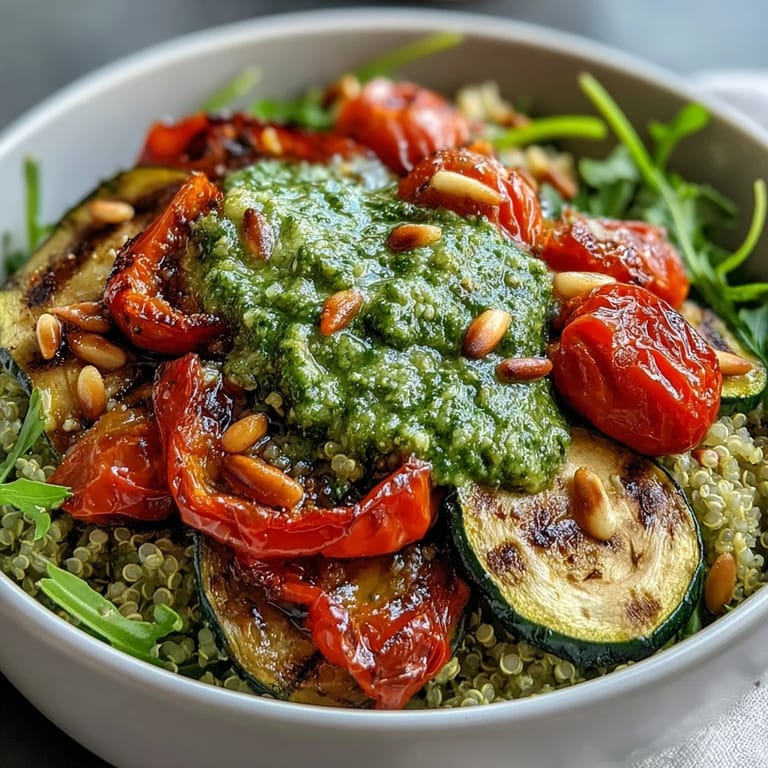
Save There was this Tuesday afternoon when my friend showed up at my kitchen with a bag of the peppiest arugula I'd ever seen, insisting we needed to do something bold with it. We ended up blending it into a pesto that was nothing like the basil version I'd always made, and suddenly this vibrant, peppery sauce became the anchor for an entire bowl of roasted vegetables and quinoa. That one experiment turned into something I make whenever I need to feel both nourished and genuinely excited about what's for lunch.
I remember making this for my sister who was going through a phase of eating only green things, and she had thirds. The moment she took that first bite and her eyes widened at how the peppery bite of arugula could be both fresh and rich was when I knew this bowl had staying power. Now it's what I reach for on days when I want something that feels indulgent but doesn't leave me sluggish.
Ingredients
- Quinoa (1 cup, uncooked): Rinse it under cold water first, that bitter coating matters more than you'd think, and it'll cook up fluffy and light instead of sticky.
- Water (2 cups): The ratio is almost 2:1, which gives you that perfect texture every time without thinking too hard about it.
- Salt (½ teaspoon for quinoa, ¼ teaspoon for pesto): Don't skip seasoning the grain itself, it makes a real difference in how it tastes.
- Cherry tomatoes (1 cup, halved): The heat of the oven concentrates their sweetness and creates little bursts of jammy flavor throughout the bowl.
- Zucchini (1 medium, sliced): Cut them about a quarter-inch thick so they get tender and slightly caramelized without turning into mush.
- Red bell pepper (1 medium, chopped): The sweetness plays beautifully against the peppery arugula, and roasting softens any harsh edges.
- Olive oil (1 tablespoon for roasting, ½ cup for pesto): Quality matters here since you taste it directly, especially in the pesto where it carries everything.
- Black pepper (¼ teaspoon for roasting, more for finishing): Freshly ground is non-negotiable, pre-ground loses its punch sitting in jars.
- Fresh arugula (2 cups packed for pesto, 2 cups more for assembly): Get the younger, more tender leaves if possible, they blend smoother and taste less intensely sharp.
- Walnuts or pine nuts (¼ cup for pesto): Pine nuts feel fancier and mellow out the peppery bite, but walnuts are earthier and more economical.
- Garlic (1 clove): One clove is all you need, the arugula already brings the peppery kick and garlic's job is to deepen, not dominate.
- Parmesan cheese (½ cup grated for pesto, ¼ cup shaved for topping): Freshly grated tastes dramatically better than pre-shredded, and shaving it for garnish gives you those delicate, melting curls.
- Lemon juice (1 tablespoon): It brightens everything and keeps the pesto from feeling heavy, adding a little snap at the end of each bite.
Tired of Takeout? 🥡
Get 10 meals you can make faster than delivery arrives. Seriously.
One email. No spam. Unsubscribe anytime.
Instructions
- Get your oven ready and start the quinoa:
- Preheat to 400°F while you measure out your quinoa and give it a quick rinse in a fine sieve, letting the water run clear. Bring the water and salt to a boil in a saucepan, add the quinoa, then lower the heat and cover it, letting it sit quietly for about 15 minutes until all the water disappears.
- Prep and roast the vegetables:
- While the quinoa's cooking, chop your tomatoes, zucchini, and pepper into bite-sized pieces, toss them with olive oil and black pepper, then spread them out on a baking sheet. Pop them in the oven for 18 to 20 minutes, shaking the pan halfway through, until everything's tender and the edges are starting to caramelize.
- Make the pesto while everything roasts:
- Put your arugula, nuts, garlic, and Parmesan in a food processor and pulse until it looks like wet sand. With the motor running, drizzle in the olive oil slowly, then add the lemon juice and salt, and process until it's as smooth or chunky as you like.
- Bring it all together:
- Dump your cooked quinoa and roasted vegetables into a large bowl, add about half the pesto, and toss everything gently so it all gets coated. This is where the flavors start getting to know each other.
- Build your bowls:
- Put a handful of fresh arugula in the bottom of each serving bowl, top it with the quinoa mixture, then drizzle the remaining pesto over the top. The fresh arugula underneath stays a little crisp and peppery, while everything else melds together.
- Finish and serve:
- Top each bowl with shaved Parmesan, toasted pine nuts if you've got them, and a crack of fresh black pepper. Eat it right away while everything's still got its texture and the warmth brings out all the flavors.
 Save
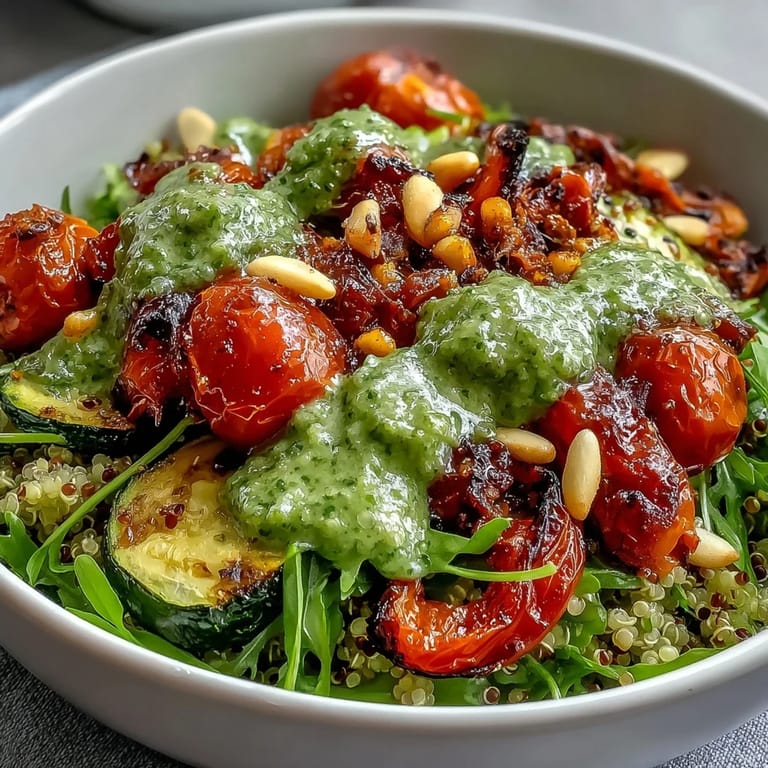
Save There's something that happens when you eat something this colorful and intentional, even if you're eating alone at your desk. You pause for a second and actually taste it instead of just fueling up, and that moment of attention feels like a small gift you give yourself. That's when I knew this bowl had become more than just dinner.
Why Arugula Changes Everything
Most pesto is gentle and herbaceous, but arugula brings this peppery attitude that wakes up your mouth and makes everything around it taste more vivid. I used to think pesto was something you had to make with basil, then I realized arugula is doing something totally different and way more interesting for a grain bowl. That peppery bite pairs with roasted vegetables in a way that feels almost electric.
Making It Your Own
This bowl is honestly a starting point, not a boundary, and the best versions I've made are the ones where I used what was actually in my kitchen. Swap the quinoa for farro if you like something chewier, throw in some roasted chickpeas or grilled chicken if you need more protein, or use whatever vegetables are looking good at the market. The pesto is what ties it all together, so that's the part I keep consistent.
Storage and Next-Day Magic
This bowl gets better as it sits, with all the components mingling together and the pesto soaking into the grain in the most delicious way. Store the pesto separately from everything else if you can, that way you can refresh it with a little more lemon juice and olive oil before serving the next day. It keeps in the fridge for three days, though honestly it rarely lasts that long in my house.
- Keep the fresh arugula for assembly separate if you're meal prepping, and add it right before eating so it stays crisp and peppery.
- The pesto tastes even brighter on day two if you give it a little stir and taste it again, adjusting salt and lemon as needed.
- This bowl is naturally vegetarian, but it's also easy to add grilled chicken, tofu, or even a fried egg on top if you want that extra richness.
 Save
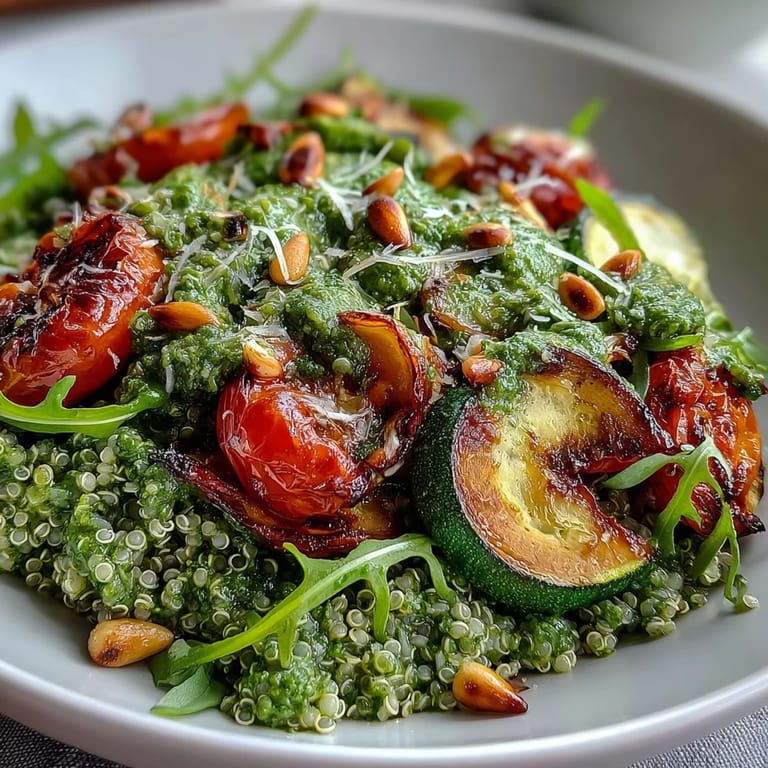
Save There's real pleasure in a bowl that's this straightforward and this alive, where every component earns its spot on your plate. Make this when you want to feel like you're actually taking care of yourself, because you are.
Recipe FAQs
- → Can I make the arugula pesto ahead of time?
Yes, prepare the pesto up to 5 days in advance and store in an airtight container in the refrigerator. The flavors actually develop and improve over time.
- → What grains work best as a quinoa substitute?
Farro, brown rice, couscous, or even wheat berries make excellent substitutions. Adjust cooking times accordingly and ensure grains are fluffy before tossing with pesto.
- → How do I make this bowl vegan?
Replace the Parmesan cheese in both the pesto and garnish with nutritional yeast or a vegan Parmesan alternative. The pesto will still be creamy and flavorful.
- → Can I add protein to make it more filling?
Grilled chicken strips, crispy tofu cubes, or roasted chickpeas complement the flavors beautifully. Add about 1 cup of your preferred protein during assembly.
- → What other vegetables can I roast?
Red onion, eggplant, sweet potato, or Brussels sprouts work wonderfully. Aim for 3-4 cups total vegetables, cut into similar sizes for even roasting.